August 11th 2026
Weather: 85F ☀️
Euphorbia sapinii De Wild.
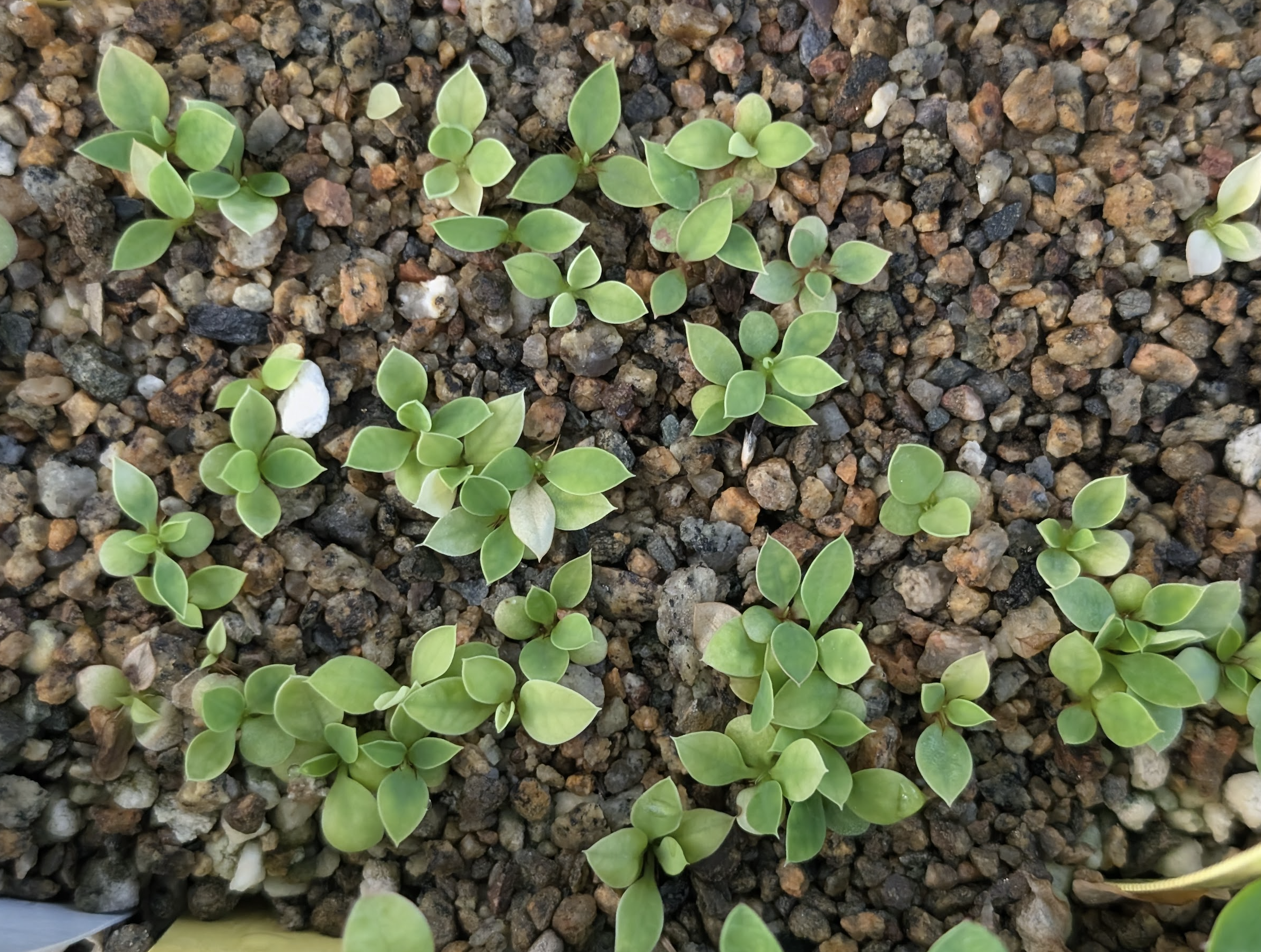
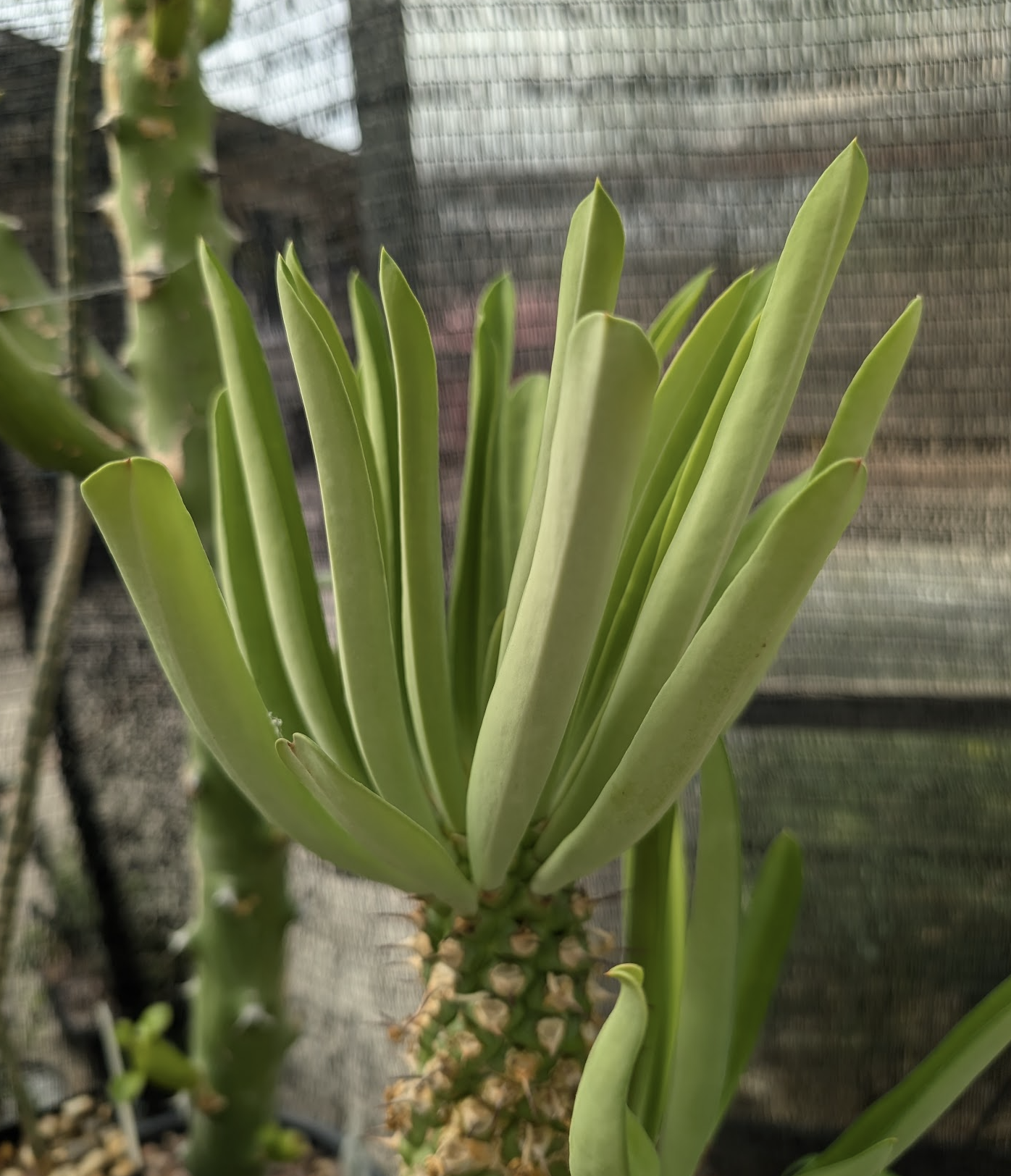
I currently have a wonderful specimen of Euphorbia sapinii on loan from a friend of mine who was kind enough to allow me to pollinate and collect seed from it. I was able to get a few seedlingsn going this year! For those less in the know, Euphorbia sapnii is within a sort of complex comprised of Euphorbia poisonii, Euphorbia venefica, Euphorbia unispina, and the elusive Euphorbia darbandensis. The most noteworthy trait of E. sapinii which trivially sets it apart from the other species in this grouping are it's long, thin, and smoothly edged leaves.
Euphorbia monteiroi Hook (Angolan form + subspecies ramosa L.C. Leach)
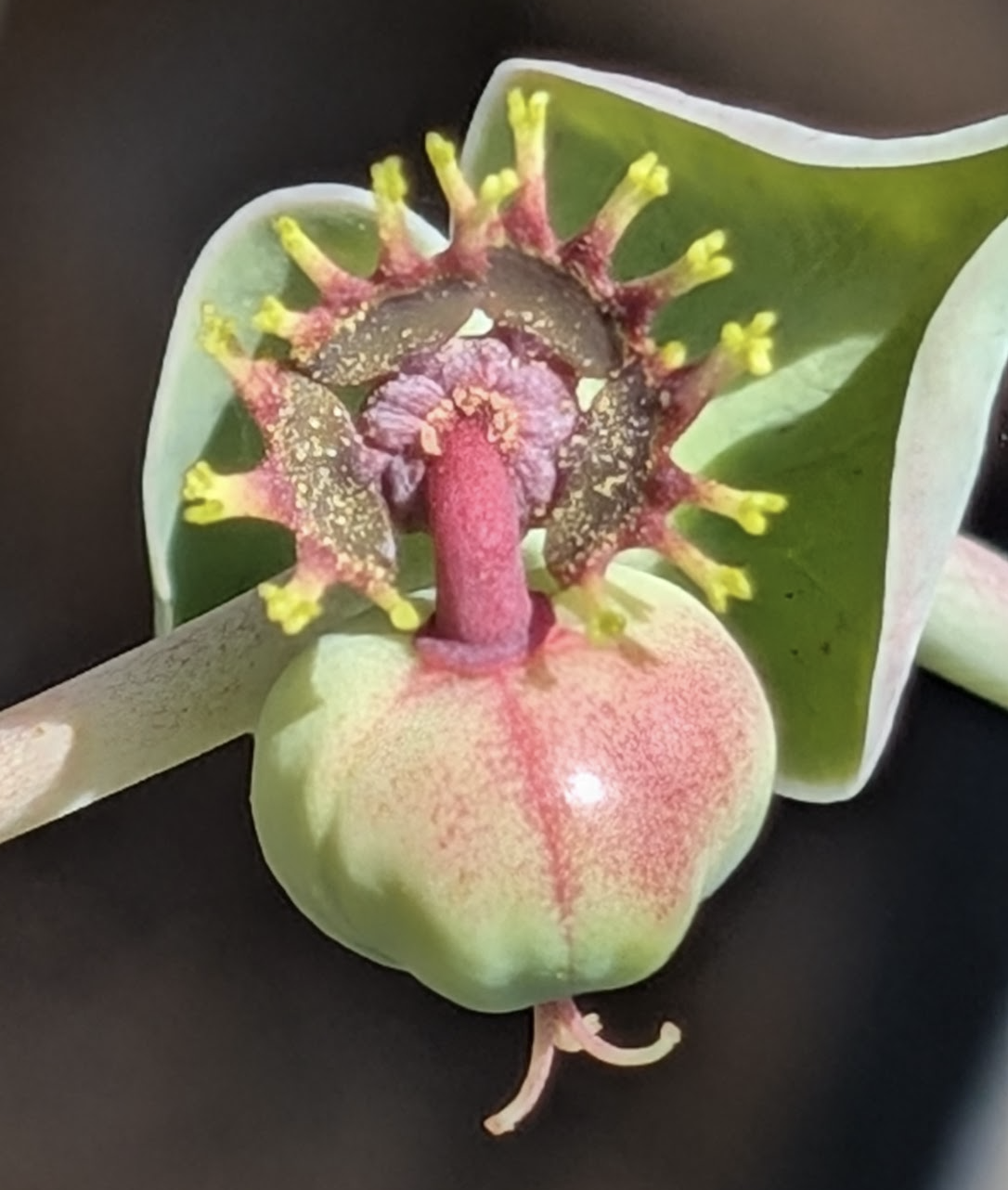
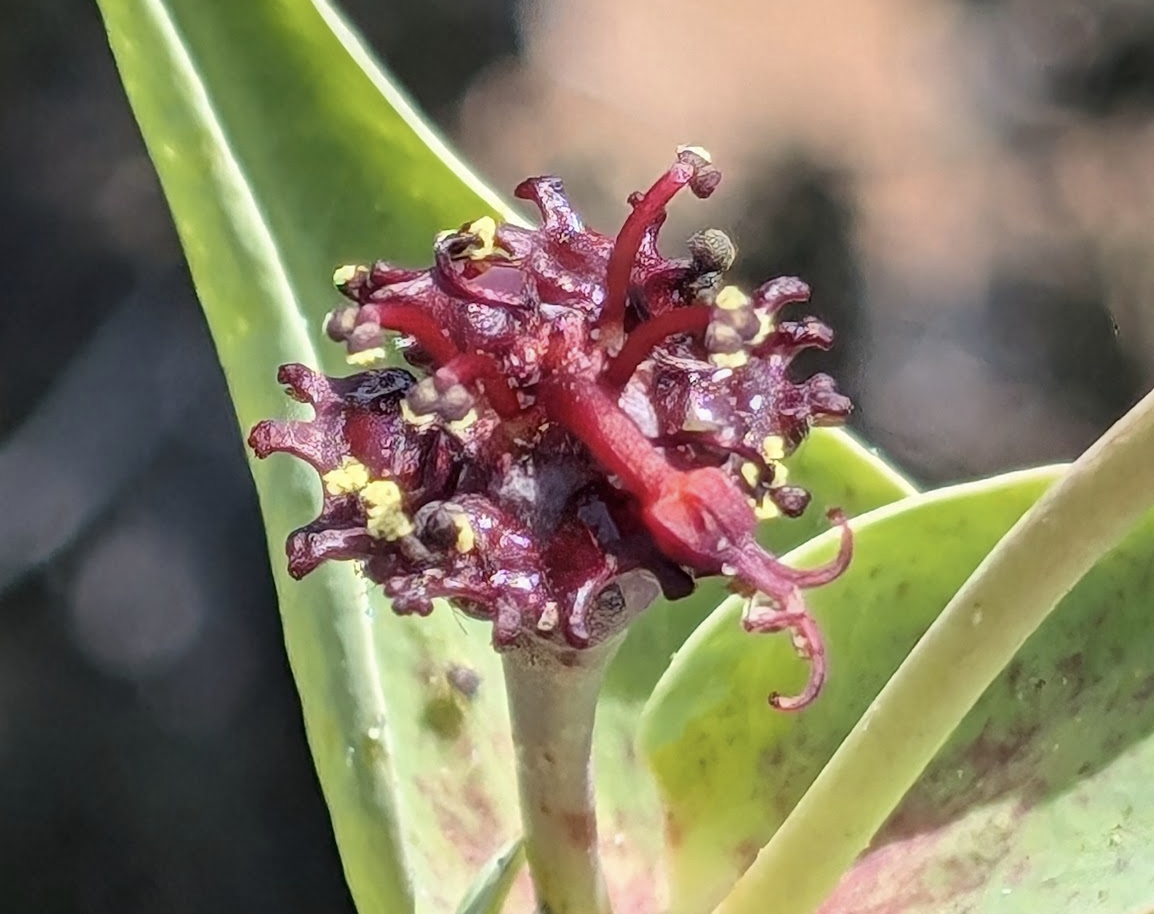
Nearly all of my Euphorbia monteiroi are currently in flower and fruiting, bearing many dozens of seed pods. E. Monteiroi ssp. monteiroi has a few forms, primarily distinguishable by their cyathia, The Angolan form has yellow-green appendages to the nectar glands as well as dark green pollen which is quite interesting. The typical form has a primarily purple-red cyathia, as does E. monteiroi ssp. ramosa, a branching subspecies with more slender shoots. I collected some seed from the Angolan form today.
Euphorbia aff. kalisana
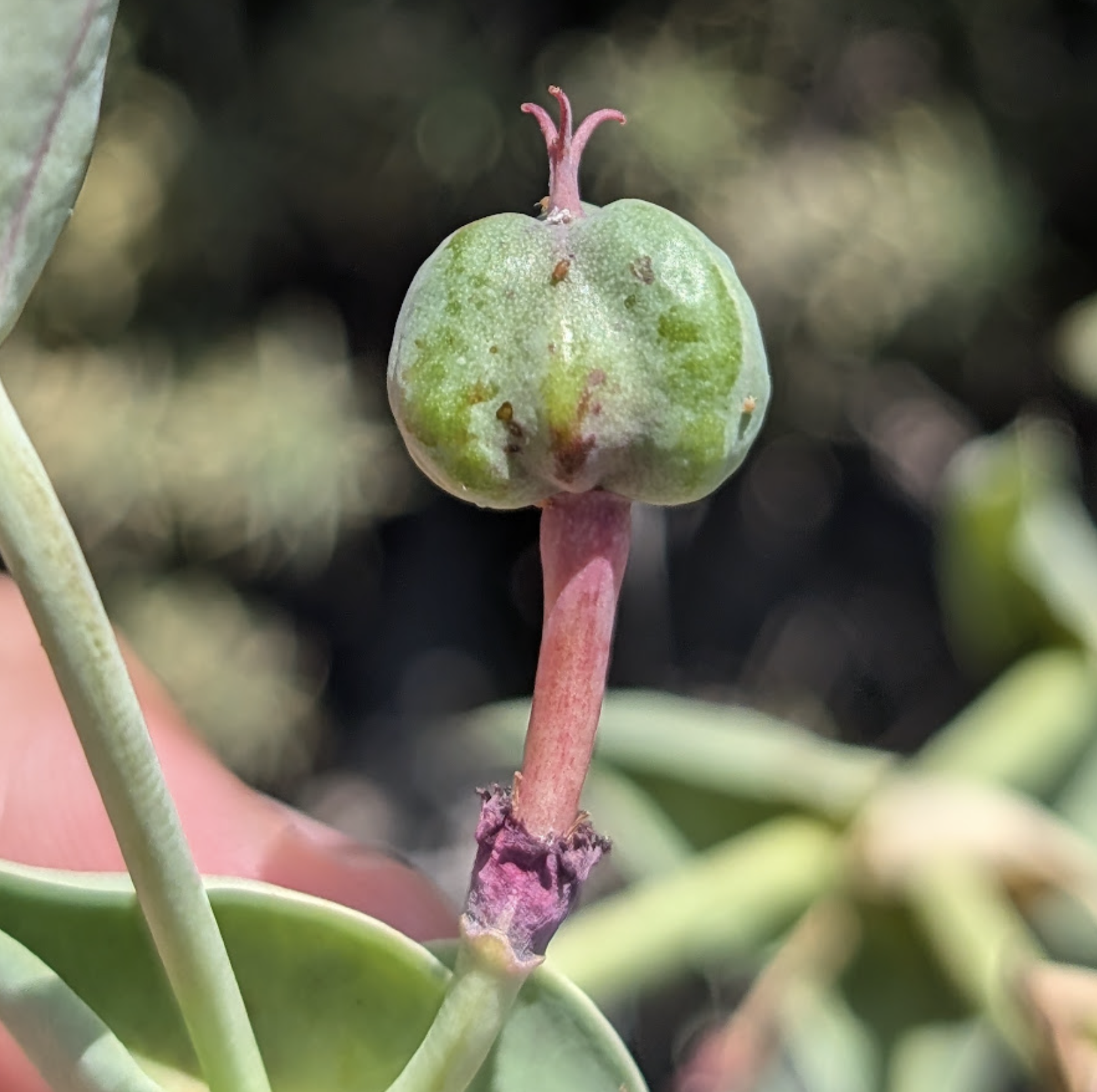
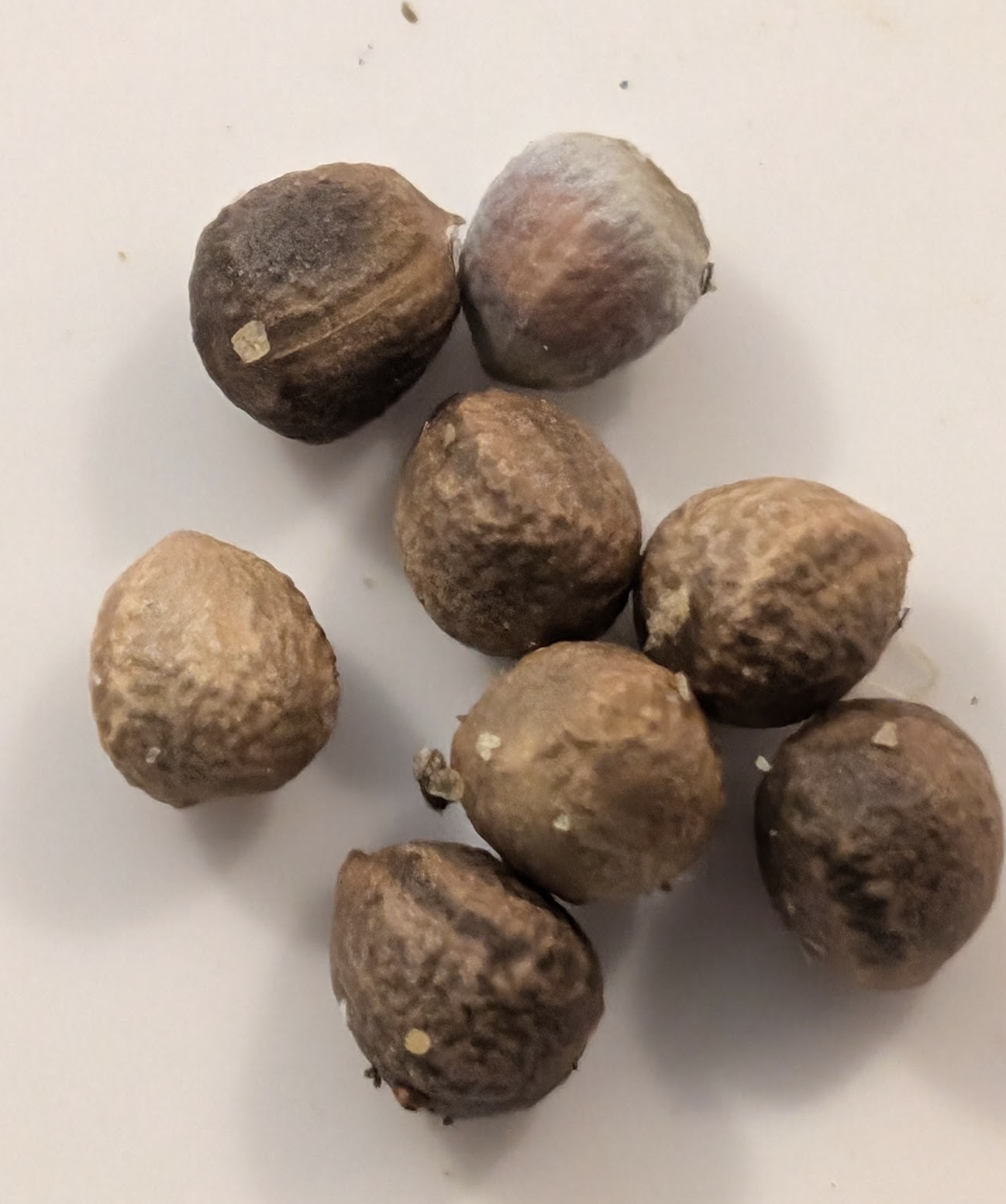
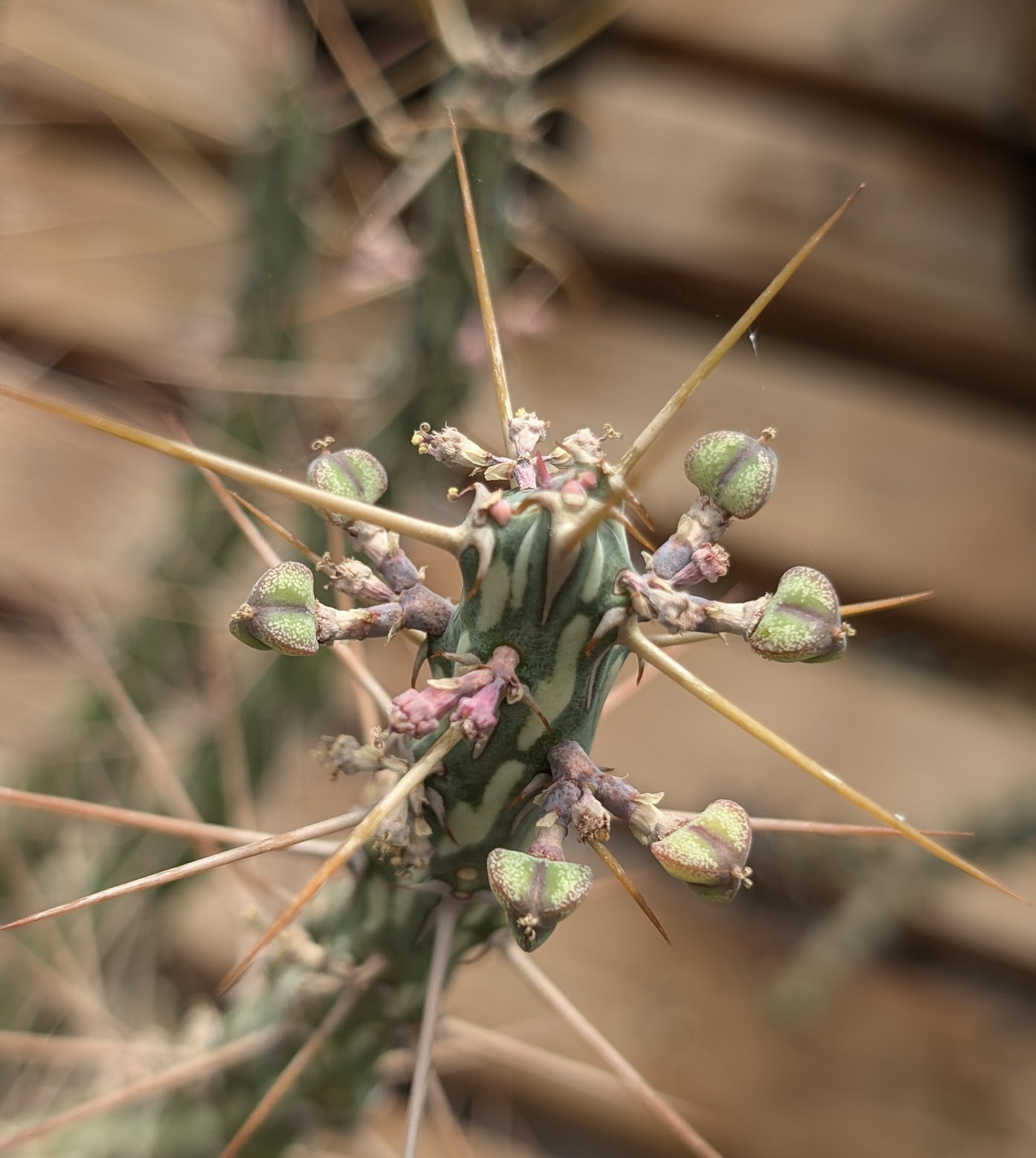
Some of my favorite Euphorbia are within Euphorbia section Triacanthium, known for having three spines versus the typical four spines per spine shield found on spiny Euphorbia. I've had a lot of luck this year in self-pollinating a Kenyan plant of Euphorbia aff. kalisana, named due to its similarity to Euphorbia kalisana. The epithet of "kalisana" means "very fierce" in Swahili, representing the very long main spine apparent in the species.
To me, the affinity between Euphorbia aff. kalisana and Euphorbia kalisana is a bit superficial, something I'll have to cover at a later time. For now, the latest self-pollination of Euphorbia aff. kalisana has been successful. I love the coloration and patterning of the seed pods of this species. The seeds can be a bit difficult to collect given the very long spines, around 2 inches long. I've recently resorted to having to cover the entire plant to capture seed.
Euphorbia gareipina ssp. balsamea (Welw. ex Hiern) L.C.Leach
While I generally work to ensure cross-pollination of species do not occur, sometimes it's less of a concern when species that wouldn't typically cross-pollinate are in flower. I've noticed several types of bees of San Diego tend to enjoy dancing around on Euphorbia gareipina ssp. balsamea, a Namibian subspecies of Euphorbia gareipina. This specific clone is derived from plant material (seeds to my understanding) of WY 1202 (Webb/Young) from Central Namibia.
Euphorbia parvimedusae Haev. & Hett.
Euphorbia parvimedusae is a Madagacan Euphorbia which was recently described in the March 2021 edition of Phytotaxa by Thomas Haevermans and Wilbert Hettersheid. I have a few several year old seedlings of this species which sometimes can be a bit finnicky with rot at times. Luckily I've been able to keep around enough to get a first batch of seed earlier this year which have turned into a nice amount of seedlings for now. This species is not readily in cultivation in the U.S, something I'd like to be a part of changing. I'll provide photos of the parent plants in a future post.